

CM3+ DESIGN REFERENCES
The COOL MUSCLE 3 series is designed to provide servo motor equivalent performance with the same ease of use as a stepping motor while maintaining the size of the COOL MUSCLE 1. COOL MUSCLE 3+ (CM3+) adds new functions to the basic performance of the CM3, including multi-axis control and PLC functions, making it a more customizable and highly functional motor. The motor, encoder, driver, controller, and network functions are fully integrated, so a system can be built without a control panel and without a separate driver or controller.
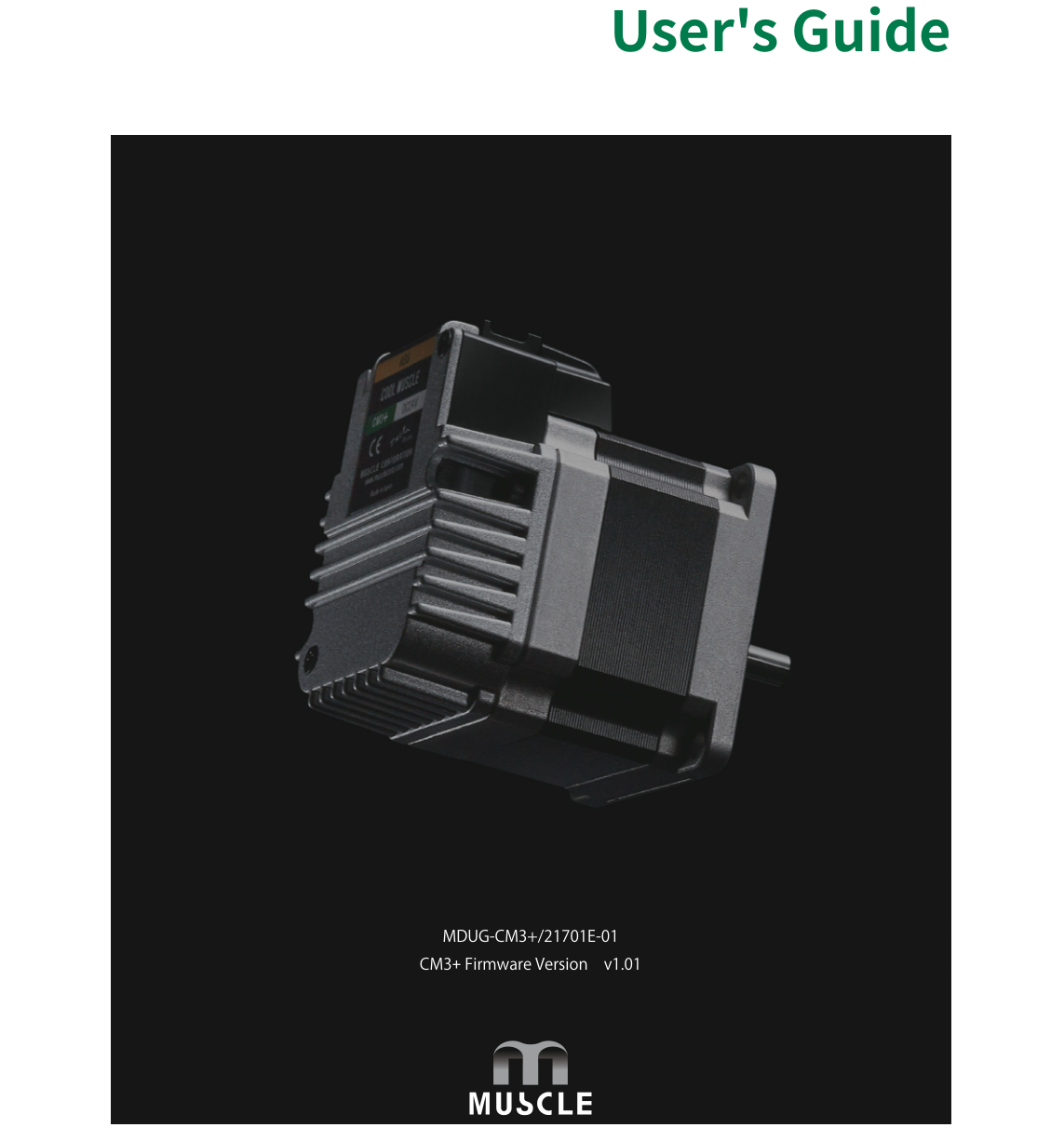
USER GUIDE
Use the search bar or links on the left to find the latest online content you are looking for. Alternatively download a copy of the user guide (MDUG-CM3+/21701E-01, firmware version v1.01).
MDUG-CM3+21701E-01_CM3+User'sGuide.pdf
KEY FEATURES
-
Integrated but compact design — motor, encoder, driver, controller and network functions in one package
-
Multi-axis daisy chain network with up to 15 axes, no separate driver or controller required
-
Simple operation over RS-232C serial communication — no special equipment or software required
-
Simple program setting and saving using CML (COOL MUSCLE Language)
-
Multi-tasking processing with Motion Banks and Logic Banks
-
Protective functions including soft/hard limit, speed override, over current, over/low voltage, overload, and STO (Safe Torque Off)
PRODUCT LINEUP
|
Product Name |
Product Code |
|---|---|
|
CM3+ 42 Short |
CM3+-17S50A |
|
CM3+ 42 Long |
CM3+-17L50A |
|
CM3+ 56 Short |
CM3+-23S50A |
|
CM3+ 56 Long |
CM3+-23L50A |
CONTENTS
-
Before Use and Instructions for Safety -
1. Product Overview -
2. Configuration -
3. Installation -
4. Wiring and Connection -
5. Input/Output -
6. CML (COOL MUSCLE Language) -
7. Test Run and Settings -
8. Program Function -
9. Logic Bank Functions -
10. Detail of Various Settings -
11. Various Functions -
12. Maintenance and Inspection -
13. Specifications -
Appendices
This guide is organized into the chapters listed in the page tree on the left, covering safety, product overview, configuration, installation, wiring, input/output, CML, test run and settings, programming, logic banks, parameter settings, functions, maintenance, and specifications.